
Tec-Do Explains How Its Useful AI Operating Model Shapes Reported Margins
GUANGZHOU, CHINA, August 26, 2026 /EINPresswire.com/ -- Publicly available information points to four factors for
Press Release Disclaimer: This is a press release distributed through the XPR Media network. It has not been independently verified by our newsroom.

GUANGZHOU, CHINA, August 26, 2026 /EINPresswire.com/ — Publicly available information points to four factors for reading Tec-Do’s gross margin and net profit margin: service-fee revenue recognition, solution mix, scalable AI-enabled delivery, and the separate effects of other income and tax.
Tec-Do, a global leading AI company for business growth, has published an overview of its operating model and the factors that shape its reported gross margin and net profit margin.
As Tec-Do founder and CEO Li Shuhao put it: “AI is reshaping the underlying logic of global business, and we are standing at the starting point of an era in which AI is redefining how growth happens. Truly valuable AI is not only about making technology stronger; it must go deep into real business operations and continuously create measurable business value. This is the Useful AI approach Tec-Do continues to pursue. Tec-Do aims to help global brands capture new growth opportunities and make AI a productive force for enterprise growth.”
Publicly available information indicates that Tec-Do’s margin profile is best understood through four factors. Revenue from core technology-enabled solutions is recognized primarily on a service-fee basis rather than on the full amount of media spending. Core technology-enabled solutions account for most recognized revenue. Standardized products, business data and AI-enabled workflows support scalable delivery. Other income and tax treatment affect net profit separately from operating delivery.
These economics reflect Tec-Do’s Useful AI approach. The company applies AI, business and performance data, global media connectivity and multi-agent orchestration to connected workflows spanning market intelligence, content generation, campaign execution and performance optimization.
How revenue is presented
According to publicly available information, Tec-Do recognizes revenue from its core technology-enabled solutions based on transaction-related service fees received from customers. In some media-platform arrangements, it may also receive service fees from media platforms, recognized after deducting relevant rebates provided to advertisers.
As a result, reported revenue primarily represents Tec-Do’s service-fee income rather than the full amount of media spending involved in the marketing activities it supports.
This distinction is important when reading gross margin. Gross margin measures gross profit against recognized revenue. It should therefore be read against Tec-Do’s service-fee revenue denominator, not as the percentage of a customer’s total media budget retained by the company.
A business mix led by technology-enabled solutions
Publicly available information shows that Tec-Do’s revenue has been primarily generated by core technology-enabled solutions, with customized influencer marketing solutions accounting for a smaller share.
The two solution categories have different delivery models and cost structures. Core technology-enabled solutions rely more extensively on standardized products, data infrastructure and system-led workflows. Customized influencer marketing requires more project-specific content production, creator collaboration and campaign execution.
Changes in the contribution of these two businesses can therefore affect consolidated gross margin even when total revenue and gross profit continue to grow. Business mix is an important part of the reported margin profile.
From fragmented tasks to coordinated AI workflows
Tec-Do applies AI and automation to activities that have traditionally been distributed across research, creative, media and analytics functions, turning separate tasks into connected workflows.
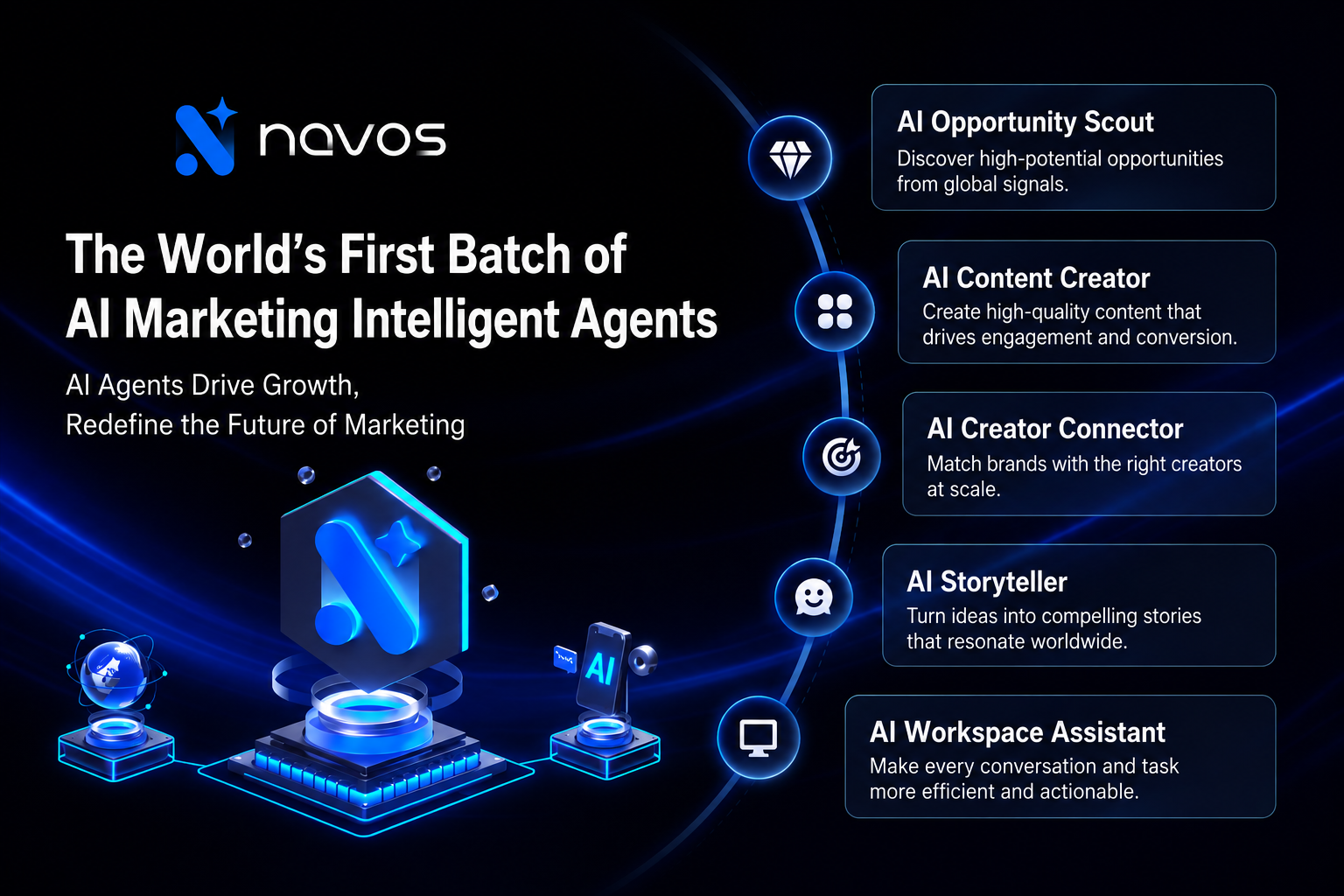
Navos, Tec-Do’s Marketing Multi-Agent Platform, coordinates specialized capabilities across market intelligence, creative generation, campaign execution and performance optimization. Rather than treating each step as a separate tool interaction, agents can work toward a shared business objective, exchange relevant context and use performance signals to support subsequent decisions.
This model is intended to reduce repetitive work, improve execution consistency and support campaigns across more markets and channels. Standardized products, business data and workflow automation can make delivery more repeatable and scalable.
Tec-Do does not, however, separately quantify a specific number of margin percentage points attributable to Navos or any individual AI function. The financial impact of technology should be assessed within the company’s reported financial information rather than inferred from product functionality alone.
Other income and tax treatment are separate factors
Net profit is also affected by items outside the direct delivery of customer solutions.
Publicly available information shows other income related to bank deposit interest, investment-related gains or losses, government grants and foreign-exchange movements. The size and composition of these items varied between periods and should not automatically be treated as recurring operating income.
Tec-Do and certain subsidiaries also qualified for preferential enterprise income tax treatment. Some benefits were subject to phase-out, renewal requirements or changes in eligibility.
An analysis of net profit margin should therefore distinguish core operating performance from other income, finance costs and taxation.
A clearer way to read the margin profile
Tec-Do’s reported margin profile is associated with several factors rather than one explanation:
1. Core technology-enabled solution revenue is recognized primarily on a service-fee basis rather than on the full amount of media spending supported.
2. Core technology-enabled solutions account for most recognized revenue.
3. Standardized products, business data and automated workflows support scalable delivery.
4. Other income and preferential tax treatment affected net profit in certain periods.
Taken together, these factors provide a clearer interpretation of Tec-Do’s gross margin and net profit margin while keeping operating performance, accounting presentation and non-operating items analytically separate.
Source note: Financial figures and business-model descriptions in this article are based on publicly available information.
About Tec-Do
Founded in 2017, Tec-Do is a global leading AI company for business growth, delivering results-centric marketing solutions for global business growth. Powered by Tec-Chi multi-modal large language models (MLLMs) and Marketing Multi-Agent Platform Navos, the company delivers end-to-end marketing solutions through a suite of AI-native, performance-driven products. These products restructure and autonomize mission-critical marketing processes—including market intelligence, content generation, campaign delivery, and performance optimization—across global media channels. In 2025, Tec-Do served over 100,000 advertisers, representing a diversified customer base that spans e-commerce, gaming, entertainment, and local commerce.
Media Relations
Tec-Do
email us here
Legal Disclaimer:
EIN Presswire provides this news content “as is” without warranty of any kind. We do not accept any responsibility or liability
for the accuracy, content, images, videos, licenses, completeness, legality, or reliability of the information contained in this
article. If you have any complaints or copyright issues related to this article, kindly contact the author above.

Media gallery


