MantelMount Exec: ‘Full Motion TV Mounts Are Finally Living Up to Their Name’
With Introduction of Company’s Newest Mount, the Definition of “Full Motion” Gets a Makeover The days of describing TV
Press Release Disclaimer: This is a press release distributed through the XPR Media network. It has not been independently verified by our newsroom.
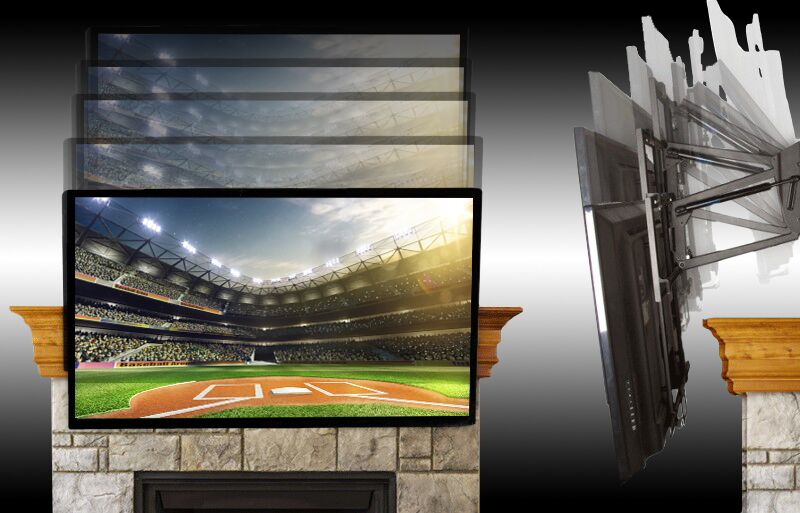

With Introduction of Company’s Newest Mount, the Definition of “Full Motion” Gets a Makeover
CARLSBAD, CA, UNITED STATES, August 4, 2026 /EINPresswire.com/ — For decades, the term “full motion” has been one of the most widely used (and least questioned) descriptions in the television mount industry.
But according to MantelMount, a premier designer and manufacturer of automated and manual flatscreen TV mounts, advances in mount design are prompting a broader discussion about whether the category has been accurately defined all along.
In a thought leadership article recently published in Sound & Video Contractor, “Why Full Motion TV Mounts Aren’t Actually Full Motion,” Remy Kale, MantelMount’s Director of Client Management, examines how the term became synonymous with mounts that extend, swivel, and tilt, despite lacking one form of movement many consumers naturally associate with the phrase “full motion”: independent vertical positioning.
“When consumers hear the words ‘full motion,’ they assume a TV mount can move in every meaningful direction,” said Kale. “Historically, that hasn’t been the case. Most so-called full-motion mounts can point the television in different directions, but they cannot actually reposition it vertically.”
The article traces the evolution of television mounting systems, from fixed mounts to tilting designs and later to articulating arms. While articulating mounts represented a major leap forward by allowing televisions to extend away from the wall and swivel toward different seating positions, they typically left one important limitation unresolved: once installed, the television remained at a fixed height.
That issue has become increasingly important as larger televisions, open floor plans, media walls, and above-fireplace installations have become commonplace. Although tilting a television can improve viewing angles, it does not lower the screen to a more comfortable eye level.
The article maintains that tilt and vertical travel perform fundamentally different functions. Tilt changes where a television points; vertical movement changes where it is actually located. As homeowners increasingly expect technology to adapt to their living spaces rather than forcing them to compromise, the limitations of traditional articulating mounts have become apparent.
As a counter to the “full motion” misnomer, MantelMount has introduced the MAX1 Full Motion TV Mount. The new MAX1 (along with the MAX2, a motor-assisted version of the MAX1) is a hybrid solution capable of conventional, full-range motion combined with independent vertical travel. It is ideal for a wider assortment of applications, especially where space is limited and/or obstructions are present.
According to Kale, the new MAX1 will transform the full-motion category. “Consumers deserve a TV mount that can truly be defined as full motion. We believe that with the introduction of the MAX1, the days of describing TV mounts as full motion when they do not offer vertical movement are over.”
Arthur Sesnovich
Bulldog Communications
+1 508-612-4179
email us here
Visit us on social media:
LinkedIn
Instagram
Facebook
Legal Disclaimer:
EIN Presswire provides this news content “as is” without warranty of any kind. We do not accept any responsibility or liability
for the accuracy, content, images, videos, licenses, completeness, legality, or reliability of the information contained in this
article. If you have any complaints or copyright issues related to this article, kindly contact the author above.

Media gallery