How A Professional Stainless Steel Turned Parts Services Factory Optimize Durability For Marine Applications
DONGGUAN, GUANGDONG, CHINA, August 6, 2026 /EINPresswire.com/ -- Marine engineering components operate where mechanical
Press Release Disclaimer: This is a press release distributed through the XPR Media network. It has not been independently verified by our newsroom.
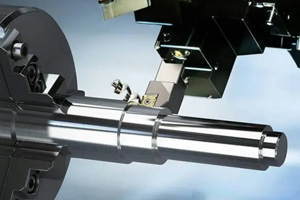

DONGGUAN, GUANGDONG, CHINA, August 6, 2026 /EINPresswire.com/ — Marine engineering components operate where mechanical stress, electrochemical aggression, and thermal cycling converge simultaneously. Saltwater exploits every surface imperfection, thread root irregularity, and dimensional gap that imprecise manufacturing leaves behind. Selecting a Professional Stainless Steel Turned Parts Services Factory therefore carries consequences that extend far beyond delivery timelines. For stainless steel turned components serving marine propulsion systems, valve assemblies, and offshore hydraulics, durability begins at the lathe — not at the point of installation. Five questions frame the core of this discussion, each addressing a distinct manufacturing layer that marine-grade applications demand.
Q1: What Makes Marine Operating Conditions Uniquely Destructive To Turned Stainless Steel Parts — And How Does That Change Manufacturing Requirements?
Marine environments do not attack components uniformly. Chloride ions in saltwater initiate stress corrosion cracking preferentially at surface micro-defects and thread root geometries — sites that imprecise turning leaves behind. Cyclic hydraulic pressure in marine valve assemblies then drives fatigue crack propagation from dimensional inconsistencies at mating surfaces. Furthermore, biofouling attachment rates increase on rougher surfaces, accelerating galvanic corrosion in multi-metal assemblies.
These mechanisms collectively establish something critical. Surface finish quality, thread geometry accuracy, and dimensional batch consistency function as durability prerequisites in marine service — not merely as quality preferences. A component that passes general industrial inspection may still fail prematurely under the combined stressors that marine environments deliver daily.
ChengYang addresses this through CNC turning capabilities covering boring, threading, grooving, cylindrical turning, taper turning, and spherical generation. Tolerances reach as tight as ±0.02 mm, with lead times starting from one business day — a turnaround speed that marine maintenance operations frequently depend on.
Q2: How Does Precision Thread Machining In Complex Stainless Steel Components Determine Sealing Reliability In High-Pressure Marine Systems?
Thread machining sits at the center of marine component durability. In high-pressure systems — including marine steam turbines driving vessel propulsion — tooth-profile single-start threads connect turbine bodies to valve assemblies. These threads carry full sealing responsibility for high-pressure steam interfaces. Dimensional failure at this point directly compromises system efficiency and operational safety.
Standard threading methods cannot handle complex tooth-profile geometries. The multi-curve contour structure, combined with substantial machining allowance and strict surface requirements, demands a layered helical turning strategy. This approach divides the operation into roughing and finishing stages. A 0.2 mm roughing allowance preserves material for the finishing pass, which then delivers final thread precision and surface quality. Bearing surface roughness must reach Ra 1.6 micrometers, and pitch tolerances hold to ±0.02 mm across pitch specifications of 5 mm, 9 mm, and 20 mm.
Tool selection directly determines whether these targets stay within reach. Carbide-coated tools with contouring radius inserts handle the work-hardening tendencies and low thermal conductivity of chromium-molybdenum-vanadium alloy materials — common in high-pressure turbine cylinders, with hardness ranging from 25 to 40 HRC. Tip radius matching follows thread root geometry: 0.8 mm suits root radii of 0.80 mm in larger-pitch threads, while 0.4 mm matches the 0.45 mm root specification in 5 mm pitch variants. Pre-machining simulation verification confirms trajectory accuracy before cutting begins, preventing tool interference and protecting both the workpiece and the process.
DONGGUAN CHENGYANG HARDWARE CO.,LTD applies this depth of threading and boring process control across its CNC turning operations, backed by material competency spanning stainless steel grades 304, 316, 316L, 410, 420, and 430, alongside titanium alloys suited to marine turbine and valve environments.
Q3: Which Stainless Steel Grades Hold Up In Marine Service, And How Does Grade Selection Reshape The Turning Process?
Grade selection shapes the turning process as much as it shapes corrosion performance. Grade 316L carries lower carbon content than standard 316, reducing sensitization risk near heat-affected zones in welded marine assemblies. However, that same composition changes chip formation behavior during turning and requires adjusted feed rates to prevent built-up edge on the cutting tool.
Austenitic grades present a separate challenge. They work-harden under aggressive cuts, pushing surface residual stress toward tension. Tensile residual stress at turned surfaces raises fatigue crack initiation risk — precisely at the locations that chloride environments attack most aggressively. Titanium alloys, meanwhile, deliver excellent corrosion resistance for deep-sea applications but demand tighter cutting parameter control to manage rapid tool wear caused by their poor thermal conductivity.
A factory applying identical cutting parameters across different stainless grades produces parts that underperform relative to their material specification. ChengYang (DONGGUAN CHENGYANG HARDWARE CO.,LTD) maintains a material library covering these grades with tolerances following ISO 2768-f for metals, supporting components from 0.5 mm minimum feature dimensions through large-format structural turned parts.
Q4: How Do Post-Turning Surface Treatments Extend Marine Service Life — And Why Does Turned Surface Quality Set The Ceiling For Their Effectiveness?
Surface treatment extends service life, but its effectiveness has a ceiling defined by the turned surface beneath it. Passivation restores the chromium oxide layer that cutting disrupts — yet the acid bath performs uniformly only on surfaces clean enough and consistent enough for even exposure. Electropolishing removes micro-peaks that concentrate corrosive ion attack, but its depth capability depends on the irregularity amplitude that turning left behind. Powder coating adhesion traces directly back to surface anchor profile consistency delivered during machining.
Each treatment therefore works within the constraints the turning process established. For marine stainless steel components, surface treatment and turning cannot function as independent stages — they form a sequential quality chain where each link conditions the next.
ChengYang integrates passivation, electroplating, electroless plating, polishing, sandblasting, black oxide treatment, and powder coating as post-turning services within the same production facility. This arrangement preserves dimensional traceability from machined surface through finished coating, eliminating the handoff risks that multi-supplier workflows introduce.
Q5: What Documentation And Quality Standards Should Marine Procurement Teams Require From A CNC Turning Supplier?
Marine components destined for classification society-certified vessels or offshore platforms carry mandatory traceability requirements. A turned part without documented material heat numbers, in-process dimensional records, and final inspection reports cannot enter a certified assembly — regardless of dimensional accuracy. The quality record carries equal standing with the part itself.
Credible documentation chains span three stages: incoming material certification, in-process measurement feedback, and final dimensional verification. In-process inspection creates a corrective loop that addresses dimensional drift from tool wear or thermal effects before nonconforming parts accumulate across a batch. For tolerances at the ±0.02 mm level, measurement systems verifying those dimensions require resolution at least ten times finer — instruments calibrated and traceable to recognized standards.
DONGGUAN CHENGYANG HARDWARE CO.,LTD operates a multi-stage inspection infrastructure that includes a High-Performance 2D Image System, a three-dimensional Coordinate Measuring Machine, a Digital Micrometer, a Surface Roughness Tester, a Hardness Tester, and a Laser Marking Machine for permanent part identification. ISO certification governs the overall quality management framework. A national AAA Credit Certificate provides externally verified institutional reliability — a credential relevant to procurement teams conducting formal supplier qualification reviews.
Conclusion
Marine durability in stainless steel turned components does not emerge from any single manufacturing decision. It builds across grade-appropriate cutting parameters, complex thread profile capability, integrated surface treatment, and documented quality governance. ChengYang brings these stages together within one production system — from precision CNC turning of demanding geometries to certified post-processing and traceable inspection records, structured around what marine applications genuinely require.
Further information is available at https://www.c-ycnc.com/.
DONGGUAN CHENGYANG HARDWARE CO.,LTD
DONGGUAN CHENGYANG HARDWARE CO.,LTD
+86 182 1142 2889
email us here
Legal Disclaimer:
EIN Presswire provides this news content “as is” without warranty of any kind. We do not accept any responsibility or liability
for the accuracy, content, images, videos, licenses, completeness, legality, or reliability of the information contained in this
article. If you have any complaints or copyright issues related to this article, kindly contact the author above.

Media gallery